
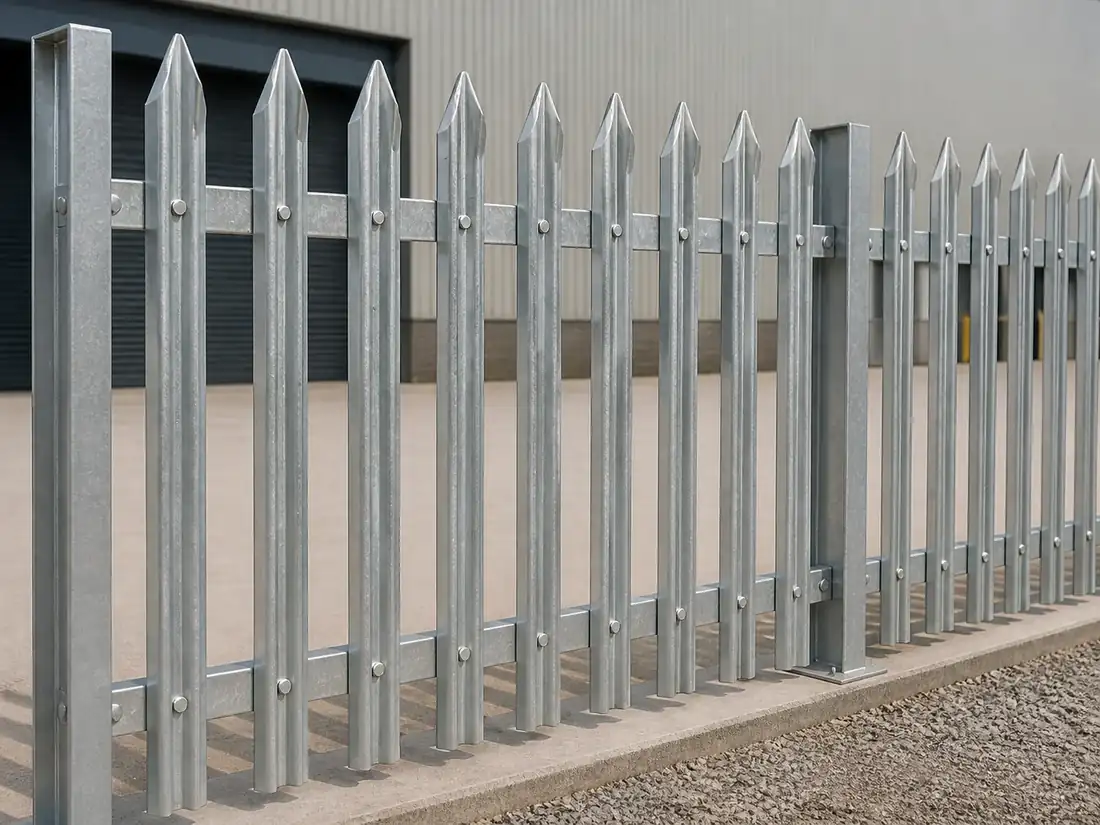
Steel palisade fencing uses individual steel pales bolted to horizontal rails. Pale profile, thickness, head type, rail layout, post spacing and fixing type all affect the finished security level and quotation.
Specify the palisade assembly, not only a panel height
- W-section or approved alternative pale profile
- Pale thickness and finished fence height
- Pale head and anti-climb objective
- Rail, post and anti-tamper fixing arrangement
- Galvanizing, coating and packing
Define the pale profile, head and spacing together
Pale profile and thickness affect the component that is bolted to the rails, while the head shape affects the finished top line and handling risk. State W-section or the approved alternative, thickness, pale length, head form and the required spacing on the bay drawing.
Do not assume that a fence height identifies the pale schedule. Ground clearance, rail positions and the post or foundation interface must also be shown.
Let the approved bay design determine rails and posts
Rail count, section and drilling must follow the fence height and approved bay design rather than a universal two-rail assumption. The post section, spacing, fish plates or connection detail and foundation method must be coordinated with the rail ends.
Specify the bolt and nut arrangement at the same time. Anti-tamper fasteners can only be matched after the pale, rail and connection thicknesses are known.
Protect formed pales and coated contact points
Pales, rails and posts are easier to count and handle when bundled by component type and bay quantity. Use separators at coated contact points, contain sharp pale heads and keep fastener kits sealed and labeled by bay or installation zone.
- Approve one representative bay before full production
- Check pale profile, rail drilling and post interfaces
- State galvanized or duplex finish requirements
- Agree bundle weight and unloading equipment
How to request a comparable quotation
State the product, dimensions, quantity, finish, supporting components, installation conditions and destination. Where drawings or a bill of quantities are available, attach them to the RFQ so the system interfaces can be reviewed together.
Final selections remain subject to the approved quotation, project drawings and applicable site requirements.
Common buyer questions
Does every palisade fence use two rails?
No. Rail count and section should follow the approved fence height and bay design. Do not treat two rails as a universal configuration.
What is the difference between a pale and a panel?
A pale is an individual formed steel vertical member. A palisade bay is assembled from multiple pales, horizontal rails, posts and fasteners.
When should anti-tamper nuts be specified?
Specify them when the project requires restricted fastener removal and the maintenance method has been considered. Match the thread and bolt length to the complete assembly.