
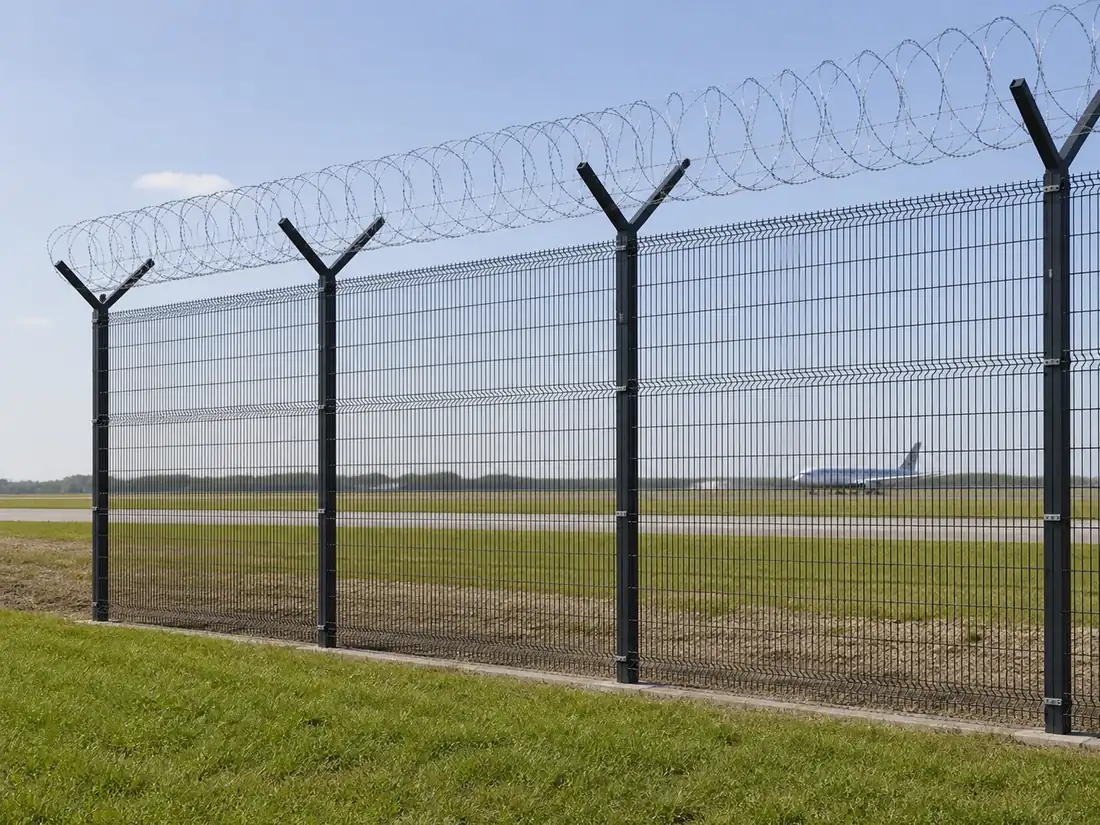
An airport perimeter fence is a coordinated boundary system rather than one standard panel. The project must define security zones, panel construction, extended posts, topping, vehicle and pedestrian access, terrain transitions, clear zones and interfaces with detection or operational requirements.
System information required before a perimeter schedule
- Boundary zones, threat objective and finished height
- Rigid panel or mesh construction and post spacing
- Straight, cranked or Y extensions and topping layout
- Vehicle, emergency and maintenance gate schedule
- Terrain, foundations, clear zones, inspection and packing zones
Divide the perimeter into repeatable design zones
Long boundaries rarely use one uninterrupted detail. Mark changes in terrain, foundation condition, access requirement, topping, clear zone and adjacent infrastructure. Give each zone an approved fence and gate detail so the quotation, packing schedule and installation sequence follow the same references.
Keep panel height separate from finished boundary height. Extended posts, ground clearance and toppings affect the overall elevation, while corners and level changes affect bay planning and component quantities.
Coordinate gates and security interfaces with the fence
Vehicle, emergency and maintenance openings should be located before the repeated panel schedule is finalized. State the clear opening, gate type, infill, operating method, support zone and how the adjoining fence and topping terminate.
Detection systems, patrol paths, lighting, drainage and clear zones may impose separate project requirements. Show their interface on the project drawing without treating the fence supplier as the designer of systems outside the agreed supply scope.
Use zone identification for inspection and delivery
Agree inspection checkpoints for panels, posts, fixings, finish, gates and toppings. When installation is phased, identify bundles and accessory kits by zone so the receiving team can check quantities and unload in a practical sequence.
- Approve one bill of materials per boundary zone
- Separate gate and fence interface records
- Define finish and inspection values before production
- Set bundle and unloading limits
- List required packing, loading and shipment records
How to request a comparable quotation
State the product, dimensions, quantity, finish, supporting components, installation conditions and destination. Where drawings or a bill of quantities are available, attach them to the RFQ so the system interfaces can be reviewed together.
Final selections remain subject to the approved quotation, project drawings and applicable site requirements.
Common buyer questions
Is airport perimeter fence a single product specification?
No. It combines project-selected panels, posts, toppings, gates, foundations and site interfaces that may vary by boundary zone.
Should gate openings be added after the panel count?
No. Locate and define openings before final bay planning because gates change terminal posts, adjoining panels, toppings and foundations.
What is the most useful RFQ attachment?
A boundary layout divided into zones, with typical fence elevations, gate schedules, terrain or foundation changes and required inspection records.