
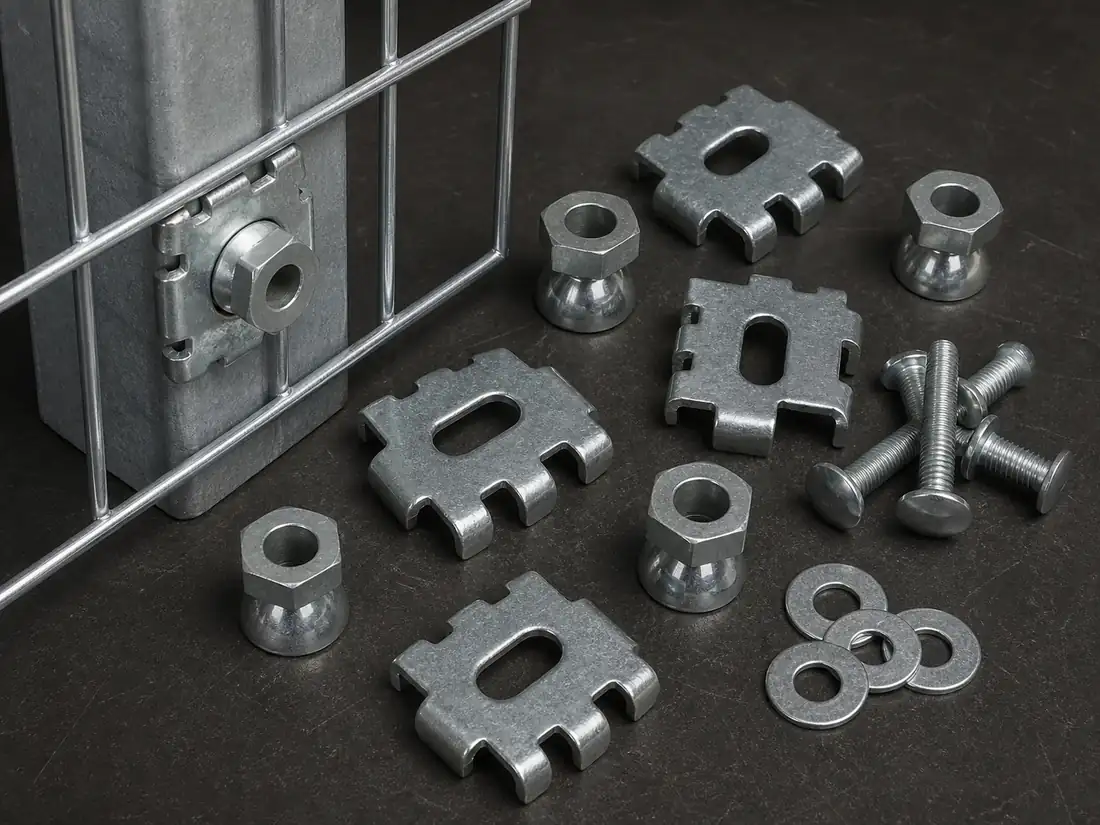
A 358 fence connection is selected from the whole stack: panel thickness, post face, clamp or flat bar, bolt length and the required resistance to unauthorized removal. A loose hardware list is not enough for a comparable fence quotation.
Confirm these connection details first
- Post section, wall thickness and mounting method
- Clamp plate or continuous flat-bar arrangement
- Security bolt, nut and thread size
- Panel overlap and clamp spacing
- Gate, topping and corner-post interfaces
Start with the panel-to-post interface
A fixing cannot be selected from the thread size alone. The panel wire, mesh opening, post face, clip or clamp thickness, bolt path, washers and nut form one connection stack. Record each layer or provide an approved sample before choosing bolt length.
For replacement work, photographs are useful but a physical sample or dimensioned interface drawing is safer. Small changes in post face, wire position or clamp geometry can prevent a clip from seating correctly.
Choose clamp plates or a continuous flat bar deliberately
Clamp plates create repeated fixing points along the post face. A continuous flat bar restrains a longer panel edge. Either arrangement must match the post, panel overlap, installation sequence and required access to the bolt or nut.
The quotation should name the fixing arrangement rather than listing loose bolts and clips. It should also state whether the fastener is intended for initial assembly only or must allow planned maintenance access.
Count complete kits, not individual fasteners
Prepare quantities from the panel, post, corner and gate schedule. Pack clips, bolts, washers and shear nuts as identified kits and agree the spare percentage. This makes shortages easier to detect before shipment and prevents unrelated hardware from being mixed on site.
- Confirm M6, M8 or M10 only after the connection is defined
- Match A2, A4 or coated steel to the agreed exposure specification
- Trial-assemble one representative connection
- Label kits by bay, post or installation zone
How to request a comparable quotation
State the product, dimensions, quantity, finish, supporting components, installation conditions and destination. Where drawings or a bill of quantities are available, attach them to the RFQ so the system interfaces can be reviewed together.
Final selections remain subject to the approved quotation, project drawings and applicable site requirements.
Common buyer questions
Can a shear nut be removed after its head breaks off?
A break-off shear nut is intended to leave a tamper-resistant conical section. Any planned maintenance method and replacement process should be agreed before it is specified.
How is security-bolt length selected?
Add the complete connection thickness and the required thread engagement, then confirm the selected bolt with a sample assembly or approved drawing.
Can one spider clip fit every rigid mesh panel?
No. Clip geometry must match the wire position, mesh opening and post interface. Confirm the panel and post sample before ordering replacement clips.