
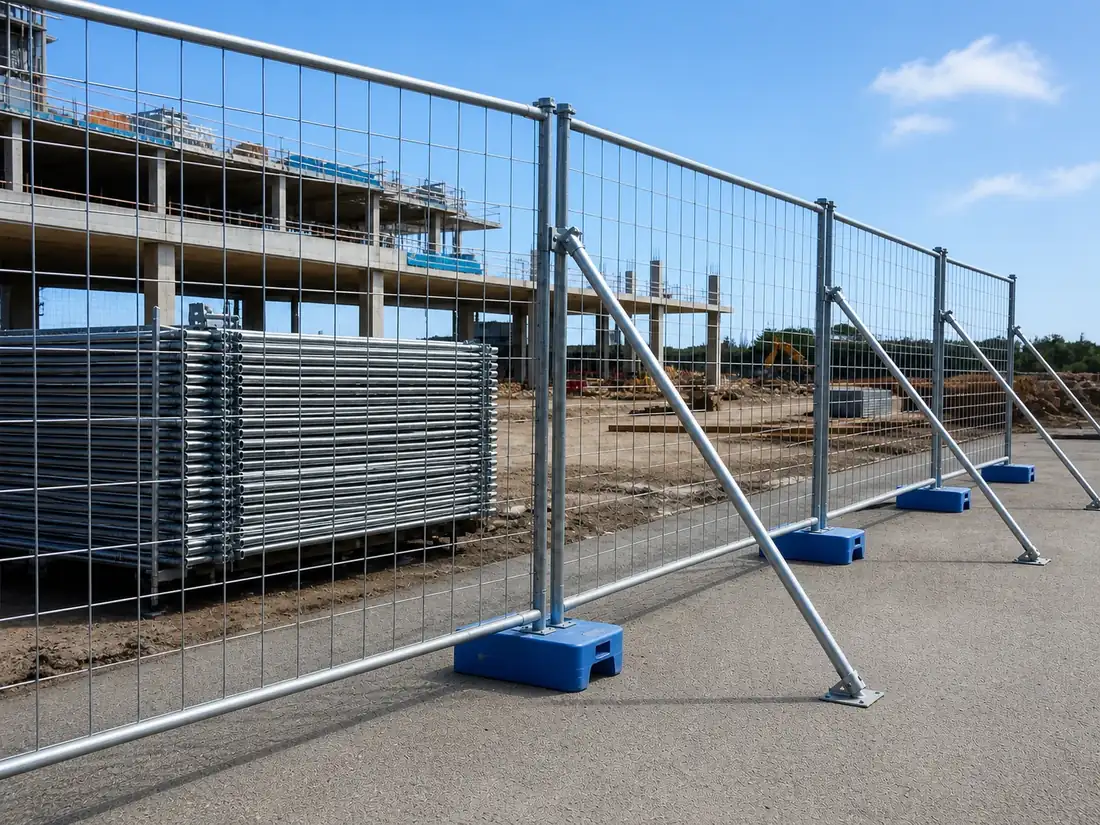
Temporary fence panels are a reusable site-isolation system, not interchangeable loose panels. The panel format, frame tube, feet, couplers, braces, gates and site exposure must be specified together.
Inputs that prevent mismatched temporary fence components
- Regional panel format and finished panel dimensions
- Frame tube diameter and wall thickness
- Foot type, ground condition and wind exposure
- Coupler and brace compatibility
- Gate sections, stillages and destination
Match the destination format and any existing rental fleet
Temporary fence dimensions, frame tubes, feet and couplers vary by market and fleet. State the destination and provide existing component dimensions when new panels must work with equipment already in service. A familiar market name is not a substitute for the actual interface dimensions.
Confirm the panel height and width, frame-tube outside diameter and wall thickness, infill wire and mesh, base or foot slots and clamp or coupler bolt spacing. Treat the gate and brace as part of the same format.
Separate product supply from the site stability design
Feet, braces and screening change the way a temporary fence is used, but the required stabilization depends on wind exposure, ground condition, site rules and the installed layout. The project installer or temporary-works designer must determine the site-specific arrangement.
Tell the supplier whether privacy mesh or signage will be fitted and where gates or corners occur. That information allows the component quotation to follow the planned layout without claiming that a standard brace count suits every site.
Plan stillages and reusable handling before shipment
Panels are normally handled repeatedly, so stillage dimensions, forklift access, component separation and unloading limits affect the usefulness of the delivered set. Agree how panels nest, how feet and couplers are counted and how damaged pieces will be identified during reuse.
- Count panels, feet, couplers, braces and gates separately
- State stillage quantity and forklift limitations
- Keep small fittings in identified cartons or bins
- Confirm the return or storage cycle if stillages will be reused
How to request a comparable quotation
State the product, dimensions, quantity, finish, supporting components, installation conditions and destination. Where drawings or a bill of quantities are available, attach them to the RFQ so the system interfaces can be reviewed together.
Final selections remain subject to the approved quotation, project drawings and applicable site requirements.
Common buyer questions
Are temporary fence panels interchangeable between markets?
Not automatically. Panel dimensions, frame tubes, foot slots, couplers and gates can differ. Compare the actual interfaces before mixing systems.
Does every temporary panel need a brace?
There is no universal brace frequency. Screening, wind, ground, corners, gates and site rules must be assessed for the installed layout.
What should be included in a temporary fence quantity schedule?
List panels, feet, couplers, braces, pedestrian and vehicle gates, stillages, screening and the agreed spare quantities as separate lines.