
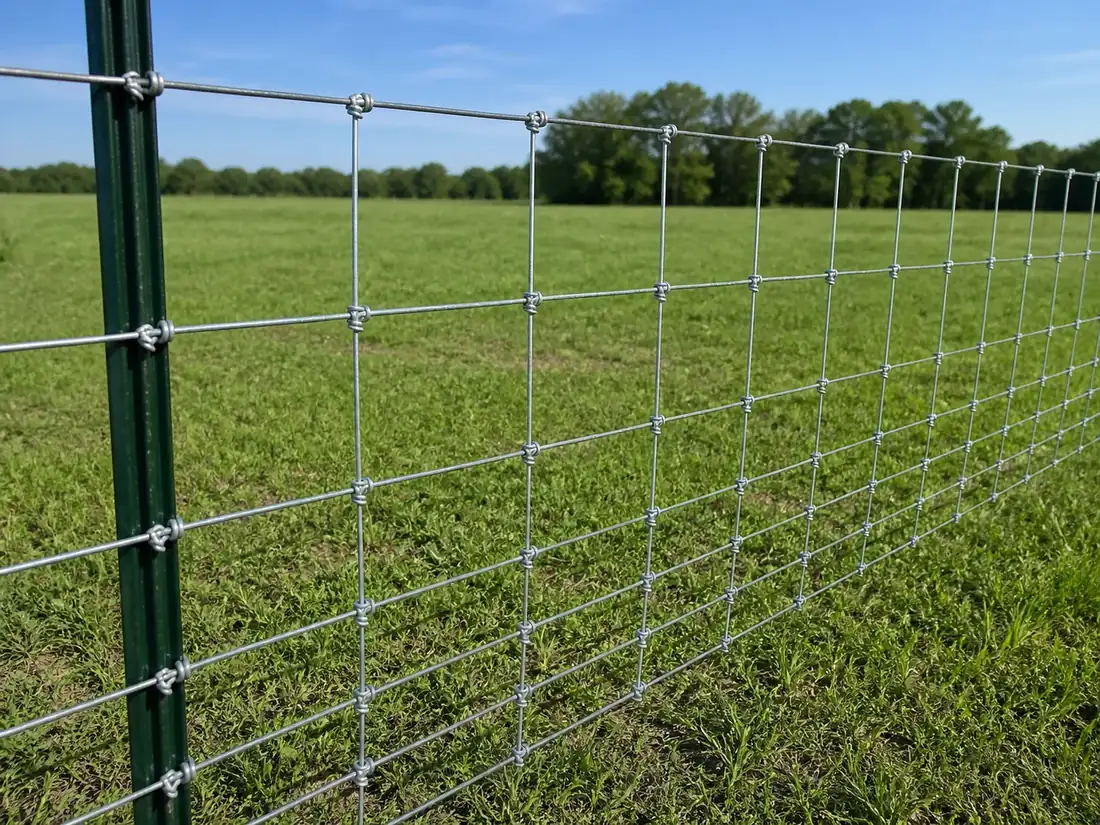
A field fence roll is defined by the complete wire layout: height, horizontal line count and graduation, vertical stay spacing, edge and line wire construction, knot type and roll length. Posts, corners, strainers and gates complete the installed boundary.
Inputs that control the field-fence configuration
- Animal or boundary objective and terrain
- Roll height, line count and graduated spacing
- Stay spacing, edge wire, line wire and hinge joint
- Corner, end, line-post and strainer arrangement
- Gate openings, total length, roll packing and destination
Choose the wire layout from the containment objective
Do not select a roll from height alone. State the livestock or boundary use, pressure points, ground clearance and whether smaller openings are required near the bottom. Record the horizontal line count and graduation so two quotations do not describe different mesh layouts under the same nominal height.
Keep stay spacing, knot construction and edge-wire requirements on the same line. If a fixed-knot or another woven system is being considered, treat it as a separate construction rather than a silent substitution for hinge-joint fence.
Map corners, ends, slopes and gates before ordering posts
Woven field fence depends on tension. Identify end assemblies, corners, changes in direction, slopes, gate openings and long straight runs on the layout before setting line-post quantities. Post type and spacing cannot be selected responsibly without the terrain and tension plan.
Gates interrupt the tensioned run and need their own support arrangement. Provide clear openings, animal or vehicle access needs and how the fence terminates at each gate post.
Align rolls, posts and installation accessories
Order rolls, line posts, corner and end assemblies, strainers, clips and gates from the same installation schedule. Confirm roll protection, bundle weights and unloading because rural sites may have different handling access from an industrial yard.
- Measure roll height, length and line layout
- Confirm wire and coating requirements
- Identify post and brace types by location
- Count clips, strainers and gate hardware
- Record inspection and packing deliverables in the order
How to request a comparable quotation
State the product, dimensions, quantity, finish, supporting components, installation conditions and destination. Where drawings or a bill of quantities are available, attach them to the RFQ so the system interfaces can be reviewed together.
Final selections remain subject to the approved quotation, project drawings and applicable site requirements.
Common buyer questions
What does graduated spacing mean?
The horizontal line spacing changes through the fence height, commonly using closer spacing near the bottom. The exact line layout must be stated in the roll configuration.
Can post spacing be confirmed without terrain information?
Only provisionally. Corners, slopes, ends, soil, tension assemblies and gates affect the final post schedule.
Is hinge-joint field fence the same as fixed-knot fence?
No. They use different knot constructions and should be quoted and approved as separate product configurations.