
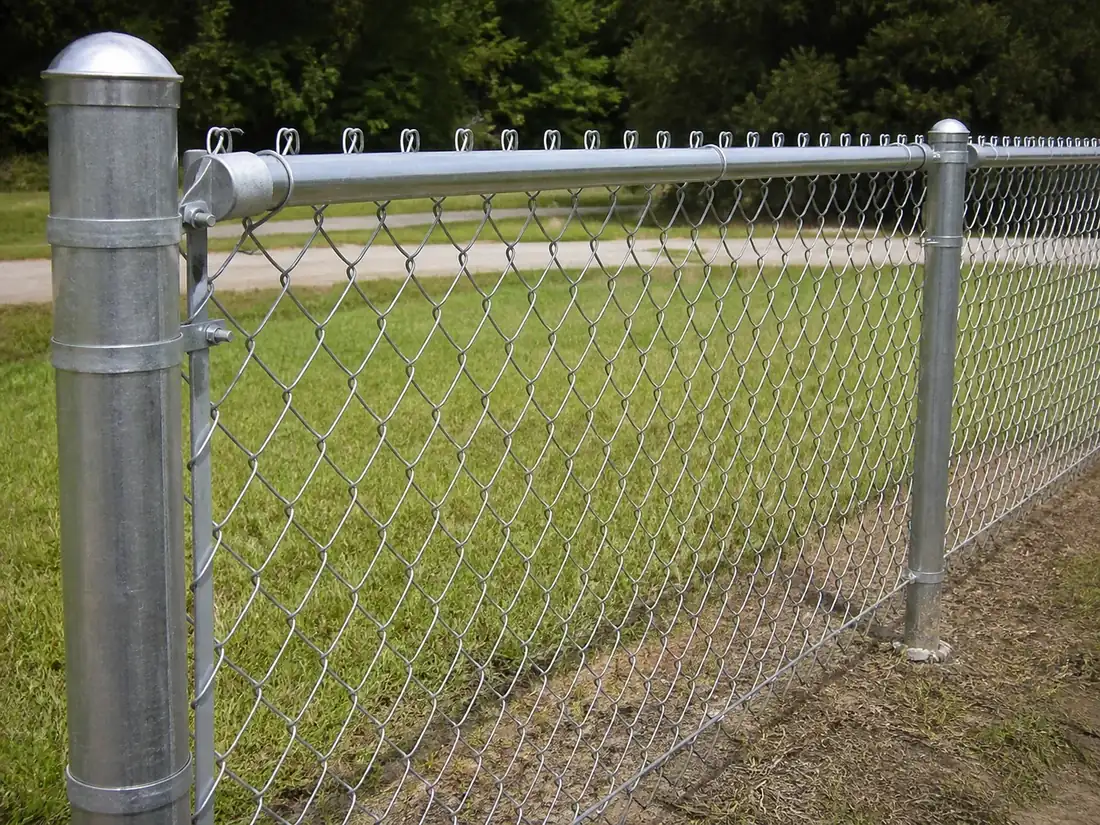
A chain link fence quotation should cover fabric, framework and tension fittings. Mesh opening and wire diameter affect the fabric, while terminal posts, rails, tension bars and bands determine the installed system.
Chain link details to include in an RFQ
- Fence height, mesh opening and wire diameter
- Galvanized or PVC-coated finish
- Terminal, corner and line-post schedule
- Top rail, brace and bottom restraint
- Gate openings, roll lengths and destination
Define the woven fabric before the framework
Start with fabric height, roll length, wire diameter, diamond aperture, selvage and coating. Chainwire is a regional name for the same woven-fabric system. These fields define the roll that will be tensioned on site. If wire is described by gauge, also state the diameter in millimetres and whether it is measured before or after coating.
Aperture and wire affect fabric weight and handling. Confirm the selected combination rather than asking for a generic heavy or light chain-link roll.
Schedule terminal, corner, line and gate posts separately
Terminal and corner locations carry the fabric tension and use different fittings from intermediate line posts. Mark ends, changes of direction, level changes and gate openings on the layout so posts, rails, brace hardware, tension bars and bands can be counted correctly. State each post and top-rail outside diameter and wall thickness; a nominal pipe name alone is not enough for supplier comparison.
State whether the system uses a top rail, tension wire or another bottom restraint. Gate frames and hinges must match the selected framework and opening schedule.
Keep rolls, framework and fittings traceable through packing
Compressed fabric rolls, long posts and rails, and small fitting cartons require different handling. Identify each bundle by product and installation zone, protect PVC-coated surfaces from abrasive contact and agree the unloading method before the final packing plan is approved.
- Record roll count, height and length
- Bundle terminal and line posts by type
- Seal and label tension fittings
- Separate gate hardware from general fittings
How to request a comparable quotation
State the product, dimensions, quantity, finish, supporting components, installation conditions and destination. Where drawings or a bill of quantities are available, attach them to the RFQ so the system interfaces can be reviewed together.
Final selections remain subject to the approved quotation, project drawings and applicable site requirements.
Common buyer questions
What is included in a complete chain-link fence system?
A complete scope normally identifies the fabric, terminal, corner and line posts, rails or tension wires, tension bars and bands, ties, bottom restraint and gates.
Is chainwire different from chain link fence?
Chainwire is a regional term for chain-link woven diamond mesh. Use both terms only to identify the product, then compare the actual mesh size, wire diameter, finish and framework.
Should an RFQ use wire gauge or millimetres?
Use millimetres as the controlling wire diameter because gauge numbers can vary. State whether the value is the steel core or finished coated diameter.
Why do terminal posts need a separate schedule?
They terminate or change the direction of fabric tension and use different fittings from ordinary line posts. Their locations control hardware quantities.
Should galvanized and PVC-coated chain link use the same packing?
Both require controlled roll and framework packing, but coated surfaces need protection from abrasion and incompatible contact points. State the required finish before the packing plan is agreed.