
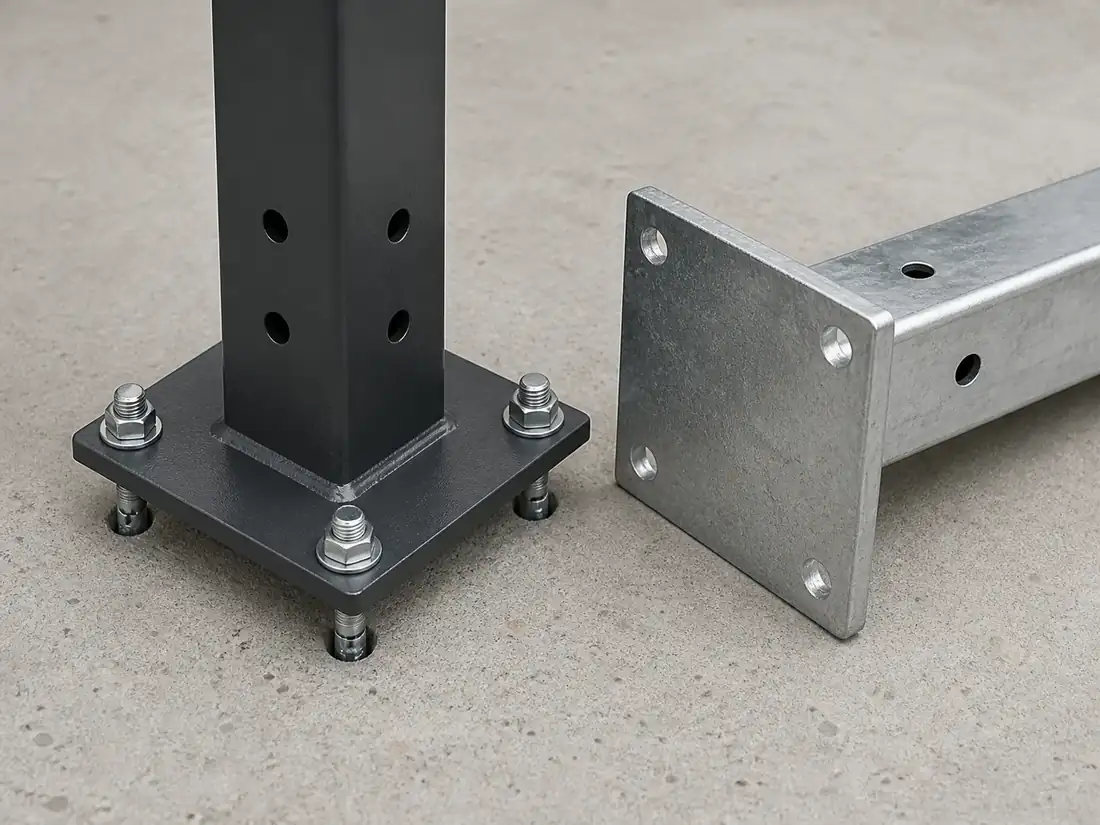
A base-plated fence post is an interface between the fence system and a supporting concrete element. Post section, fence height, base plate, hole pattern, weld, gussets, anchors, concrete condition and edge distance must be reviewed together by the responsible project designer.
Information needed before the flange drawing is approved
- Post section, wall thickness, height and panel connection
- Base-plate length, width, thickness and hole centers
- Weld and gusset arrangement
- Concrete support, strength, thickness and edge distances
- Anchor type, diameter, embedment, finish and installation access
Start with the fence load path and supporting substrate
The post and flange cannot be selected from fence height alone. Provide the panel system, post spacing, gate or topping interfaces, wind or project design inputs and the concrete element that receives the anchors. A slab edge, retaining wall, plinth and existing structure may require different project review.
Record concrete thickness, strength, reinforcement information where available, edge distance, surface level and access for drilling or chemical installation. The project structural designer must approve the support and anchor arrangement.
Keep the post, plate, weld and anchors on one drawing
State post profile and orientation, plate dimensions, hole diameter and centers, weld size, gussets and the panel connection datum. Anchor diameter alone is not enough: the approved system also needs anchor type, material, embedment, washers, nuts, installation procedure and required inspection.
Check whether the post or plate conflicts with coping, drainage, reinforcement, kerbs or adjacent finishes. For existing structures, site dimensions should be confirmed before drilling templates are released.
Protect flanges and identify anchors during shipment
Base plates create projecting corners and finished contact surfaces. Agree separators, corner protection, pallet orientation and strap isolation, then pack anchors and fixing hardware as identified sets matched to the post schedule.
- Verify post and plate dimensions
- Check hole centers, orientation, weld and gussets
- Confirm coating coverage and protected contact points
- Identify anchor kits by post type
- Record bundle weight and unloading method
How to request a comparable quotation
State the product, dimensions, quantity, finish, supporting components, installation conditions and destination. Where drawings or a bill of quantities are available, attach them to the RFQ so the system interfaces can be reviewed together.
Final selections remain subject to the approved quotation, project drawings and applicable site requirements.
Common buyer questions
Can a standard base plate be used for every fence height?
No. The post, fence system, site loads, plate, anchors and supporting concrete must be reviewed for the specific project.
Are anchors automatically included with base-plated posts?
Only when listed in the quotation. Define anchor type, dimensions, material, quantity and installation responsibility explicitly.
What should be checked on an existing concrete wall?
Confirm wall geometry, concrete condition, thickness, reinforcement information, edge distances, surface level and access before the anchor layout is approved.